
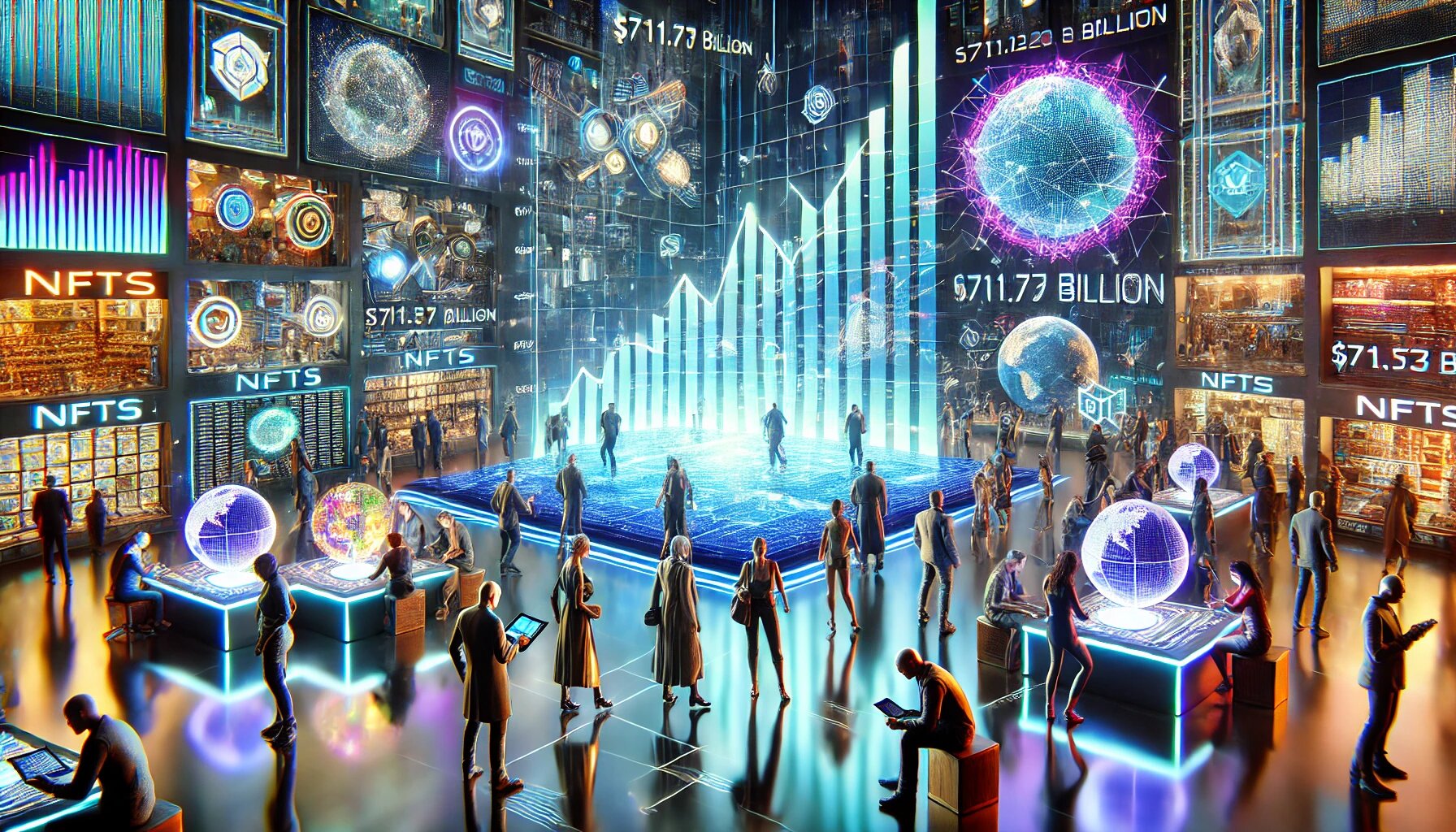
អនាគតនៃទ្រព្យសកម្មឌីជីថល៖ NFTs គ្រោងនឹងឈានដល់ទំហំទីផ្សារចំនួន $711.73 ពាន់លានដុល្លារនៅឆ្នាំ 2034
NFTs (Non-Fungible Tokens) គឺជាវត្ថុឌីជីថលតែមួយគត់ដែលរក្សាទុកនៅលើ blockchain។ វាធ្វើឱ្យមានការផ្ទៀងផ្ទាត់អត្តសញ្ញាណ និងភាពជាម្ចាស់។ មិនដូចនឹង Bitcoin ដែលអាចផ្លាស់ប្តូរក្នុងតម្លៃដូចគ្នា NFTs គឺមានតែមួយមិនស្ទួន ហើយអាចតំណាងឱ្យសិល្បៈឌីជីថល, តន្ត្រី, ធាតុនៅក្នុងហ្គេម និងច្រើនទៀត។
នៅឆ្នាំ 2024 ទីផ្សារ NFT មានតម្លៃប្រហែល 62.19 ពាន់លានដុល្លារ។ ការកើនឡើងនេះកើតចេញពីសិល្បករ និងអ្នកបង្កើតខ្លួនឯង ដែលប្រើ NFTs ដើម្បីលក់ការងាររបស់ពួកគេដោយផ្ទាល់ទៅអ្នកគាំទ្រ ដោយមិនចាំបាច់មានខ្សែការផ្សព្វផ្សាយប្រពៃណី។ អ្នកប្រមូលវត្ថុឌីជីថលក៏ចាប់អារម្មណ៍ផងដែរ ពីព្រោះពួកគេអាចទទួលបានកម្មសិទ្ធិដែលអាចផ្ទៀងផ្ទាត់បាន។
តាមការព្យាករណ៍ ទីផ្សារ NFT នឹងកើនឡើងពី 79.35 ពាន់លានដុល្លារ នៅឆ្នាំ 2025 ទៅដល់ 711.73 ពាន់លានដុល្លារ ក្នុងឆ្នាំ 2034 ជាមួយនឹងអត្រាកំណើនប្រចាំឆ្នាំ 27.60%។
ហេតុអ្វី NFT កំពុងរីកចម្រើន?
- សិល្បៈឌីជីថល៖ សិល្បករអាចបង្កើត និងលក់ស្នាដៃរបស់ពួកគេដោយផ្តល់ជាសិទ្ធិជាម្ចាស់តាម blockchain ដែលជួយការពារការក្លែងបន្លំ។
- ហ្គេម៖ អ្នកលេងអាចជាម្ចាស់ធាតុនៅក្នុងហ្គេម ហើយអាចប្រើប្រាស់ ឬលក់វាដោយឯករាជ្យ នៅលើបណ្តាញផ្សេងៗ។
- រូបិយប័ណ្ណឌីជីថល៖ នៅពេលដែល cryptocurrency រីកដុះដាល NFTs ក៏កាន់តែមានតម្លៃ និងអាចរកប្រាក់ចំណូលបាន។
អនាគត NFTs អាចមានតួនាទីធំជាងនេះផងដែរ។ អ្នកអាចទិញ-លក់អចលនទ្រព្យនិម្មិត (virtual real estate) ជា NFTs, ទទួលបានអាល់ប៊ុមតន្ត្រីផ្តាច់មុខ ឬទូទាត់វិញ្ញាបនបត្រអប់រំជាទ្រព្យសកម្មឌីជីថល។
ទីផ្សារ NFT កំពុងធ្វើឱ្យមានការផ្លាស់ប្តូរជាប្រវត្តិសាស្រ្ត ក្នុងវិស័យសិល្បៈ កម្សាន្ត និងអាជីវកម្ម។ ដោយមានការព្យាករណ៍ថាទីផ្សារនេះនឹងអាចមានតម្លៃដល់ 711.73 ពាន់លានដុល្លារ នៅឆ្នាំ 2034 NFTs នឹងក្លាយជាផ្នែកសំខាន់នៃពិភពឌីជីថលថ្មី។
From Art to Real Estate: NFTs Pave the Way for a $711.73 Billion Digital Economy by 2034
In the early 2020s, a digital revolution quietly began, reshaping the very fabric of art, gaming, and collectibles. Non-Fungible Tokens, or NFTs, emerged as unique digital assets, each embedded with distinct information, ensuring their individuality and rarity. Unlike cryptocurrencies such as Bitcoin or Ethereum, which are identical and interchangeable, NFTs introduced a new paradigm of digital ownership.
By 2024, the NFT market had already made significant strides, with a valuation of approximately $62.19 billion.
This rapid growth was fueled by artists, musicians, and creators worldwide, who saw NFTs as a revolutionary way to monetize their work, reaching audiences without traditional intermediaries.
The journey from 2025 onwards was nothing short of remarkable. The market's valuation soared from $79.35 billion in 2025 to an astounding $711.73 billion by 2034, reflecting a compound annual growth rate (CAGR) of 27.60%.
This exponential growth wasn't merely a financial trend but a testament to the global shift towards digital assets and decentralized platforms.
Several factors contributed to this unprecedented rise. The increasing global demand for digital art played a pivotal role. Artists embraced NFTs to tokenize their creations, offering collectors verifiable ownership and provenance. This not only combated issues like art forgery but also opened new revenue streams for creators.
Simultaneously, the gaming industry underwent a transformation. In-game assets, once confined to specific platforms, became tradable NFTs, allowing players true ownership and the ability to trade or sell items across different games and platforms. This interoperability enhanced the gaming experience, making it more immersive and rewarding.
Cryptocurrency adoption also played a significant role. As more individuals and institutions embraced digital currencies, the infrastructure supporting NFTs strengthened. Blockchain technology, the backbone of NFTs, ensured transparency, security, and immutability, building trust among users and investors alike.
By 2034, NFTs had permeated various sectors beyond art and gaming. Real estate saw virtual properties being bought and sold as NFTs. The music industry utilized NFTs for album releases, offering fans exclusive content and experiences. Even educational institutions began issuing certificates and degrees as NFTs, ensuring authenticity and reducing fraudulent claims.
This narrative of NFTs is not just about digital assets but about the evolution of ownership in the digital age. The projection of a $711.73 billion market by 2034 signifies more than economic growth; it represents a cultural shift towards valuing and legitimizing digital creations, forever altering how we perceive and interact with the digital world.

 3061.392 SRY